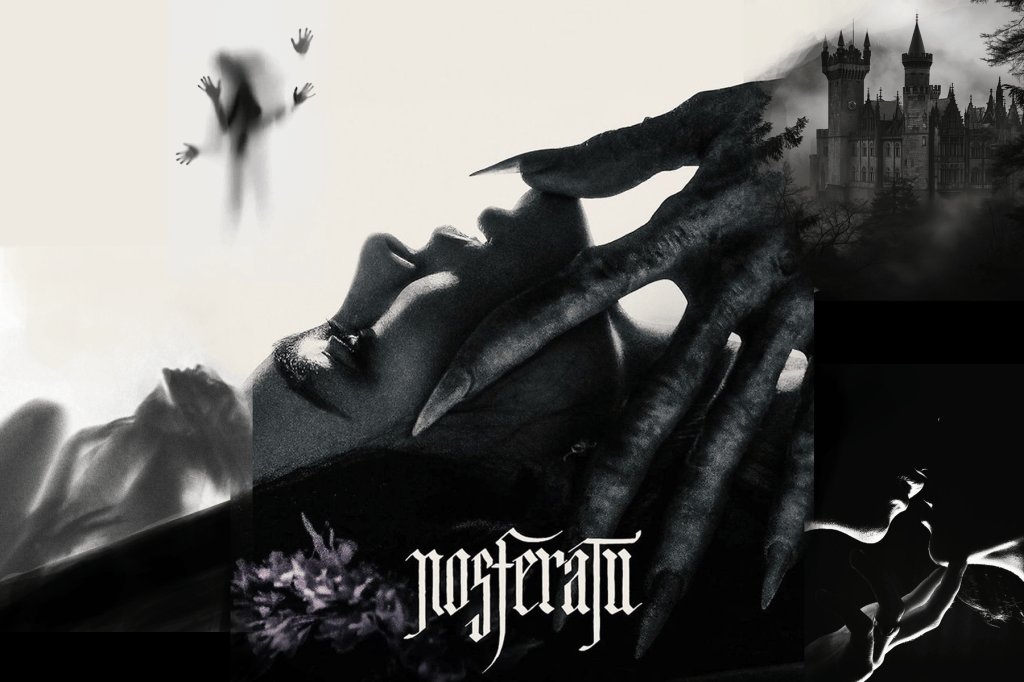
A person somewhere someplace said to me “I’m over the sexy vampire thing, it feels overdone”.
As a sexy vampire enthusiast, this offended my delicate sensibilities.
To be fair, they were talking about the 2024 edition of Nosferatu, which is about as far from sexy as an individual vampire goes aesthetically, but the monstrous vampire in question was still very sexually charged. Now that I’ve seen the film multiple times I’m excited to unpack this sentiment, why vampires are the peak of complicated sex appeal in both horror and romance, and how Nosferatu fits into the horrific beauty of vampires.
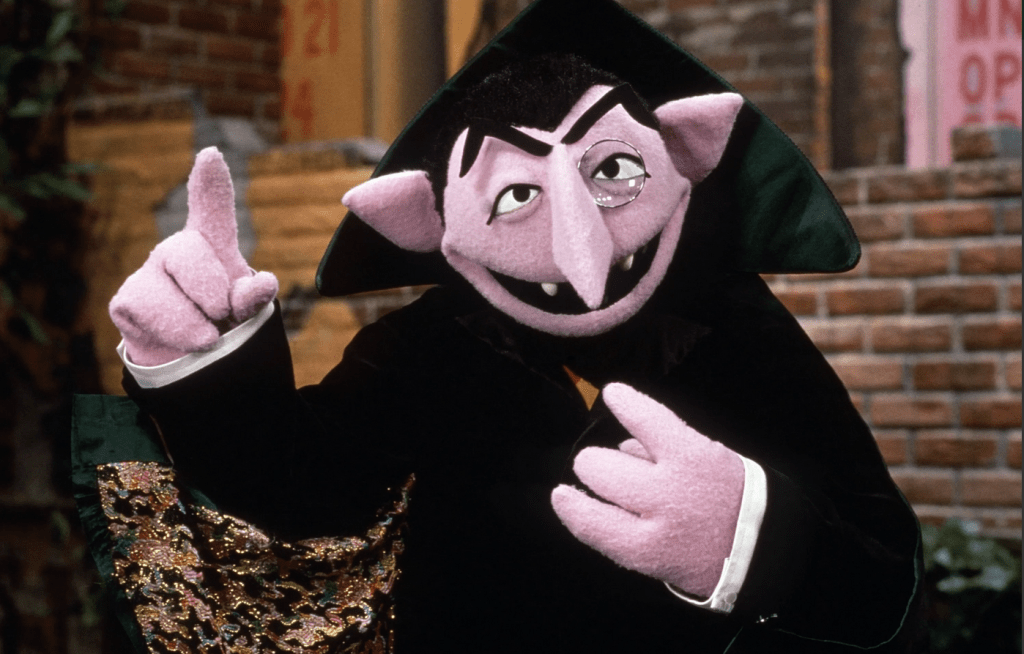
First and foremost, why are vampires sexy?
He’s there when it Counts.
I think to understand why vampires are sexy, we have to understand who they’re sexy to (generally the women shaped) and why narratives for that category would benefit from having vampires.
I will say almost everything I’m about to say in this next segment is explained and elaborated on in great detail by Contrapoints’ in her Twilight video essay so I really encourage you to watch it if you want to know more.
Historically speaking, women just weren’t supposed to get horny. A good woman is chaste, pure, and only has sex to produce children. Any deviation from this rigid structure essentially renders that woman into a harlot, strumpet, whore, and/or slut. So how is a girl supposed to get her freak on when the mere act of experiencing authentic desire is verboten?
Conveniently, Carl Jung is here to help us.
Some might also want to bring up Freud for the next segment of discussion, but Coke Daddy just isn’t as fun for me to talk about. Deal with it!
Jung came up with the notion that the conscious ego has certain beliefs about how the person must be in order to survive, and restricted elements of the person’s full self are buried under the surface of the mind in the unconscious. These restricted elements are what’s known as the shadow. The shadow is all the shameful, embarrassing, kinky thoughts and feelings you wish you didn’t have and therefore repress. However, the unconscious mind still tries to experience the shadow elements of the Self, and so the conscious mind projects these shadows onto other people for the unconscious mind to sample.
So in the case of women who are trying to be “good” and not experience their own sexuality through their own lens and bodies, they relegate their sexual desire, aggression, and agency into the half of the species that is allowed to revel in their sexuality freely – men. We see this adage all the time – “all men care about is sex” / “you know how men are, they’re only after one thing”.
This projection allows women to be free of the responsibility of experiencing their own sexuality and makes men the evil bad seducers when women are sexual at all.
I’m not bad, I’m just drawn that way (by horny animators).

Romance stories for women by women tend to have a particular structure of characters to them that enables the reader to best experience their own sexuality – the female self insert is woefully normal and awkward, even clumsy or downright unattractive (which is nonthreatening / relatable to the reader) and naturally she immediately draws the attention of every male in the narrative through the power of being her magical self. It’s not that she’s sexual, it’s that the male characters are at her!
Any sexual agency the woman would want to display can be vicariously enjoyed through the male characters’ bottomless craving for the self insert. Usually the self insert character is not interested in the majority of the men – therefore proving to the audience that she is A Good Girl ™ and therefore safe to relate to – except for one special rare specimen who is unlike all the others.
The One Special Rare Specimen is unattainable and cool and confident and all of the things that the Self Insert wishes she was – aka, he is actually the projections of the unconscious Self. If the Self Insert wears black, he wears white. If she’s good, he’s bad. If she’s a zany, quippy extrovert, he’s a serious, quiet tough guy. If she’s a studious nerd, then he’s a popular jock. If she’s yin, he’s yang. If she’s not allowed to be sexual at all, then he is hyper sexual.
Now that we’ve established the structure of how romance stories work, why do vampires serve these narratives so well?
If the Self Insert can’t be sexual in order to be safe representatives for the reader, then making the One Special Rare Specimen a vampire turns the scripted dichotomy up to eleven. How does this happen?
Vampires represent endless, insatiable hunger. They crave lifeforce and have mysterious powers. They are nearly impossible to kill. They’re often inhumanly beautiful – and that word “inhuman” is what makes them fit the One Special Rare Specimen bill so flawlessly. More on this later.
The other trait that a vampire holds is an effortless blend between masculine and feminine simply in its nature but also often in their aesthetic depiction. To clarify, a vampire is a being that consumes the life force of another living being (most often human blood) by penetrating their boundaries in some way. The archetypal masculine is obvious, the act of penetrating boundaries is reminiscent of the traditionally male side of sex, while the feminine side is the absorption and consumption of the other, which correlates to the traditionally female side receiving the literal body fluids of the male partner.
To put it simply, if the character is supernaturally seductive and embodies androgyny, it’s a vampire.
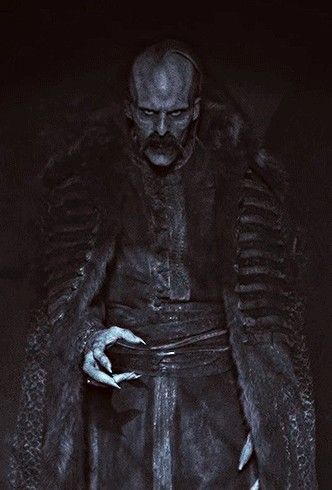
Traditional Vampire: Count Orlok
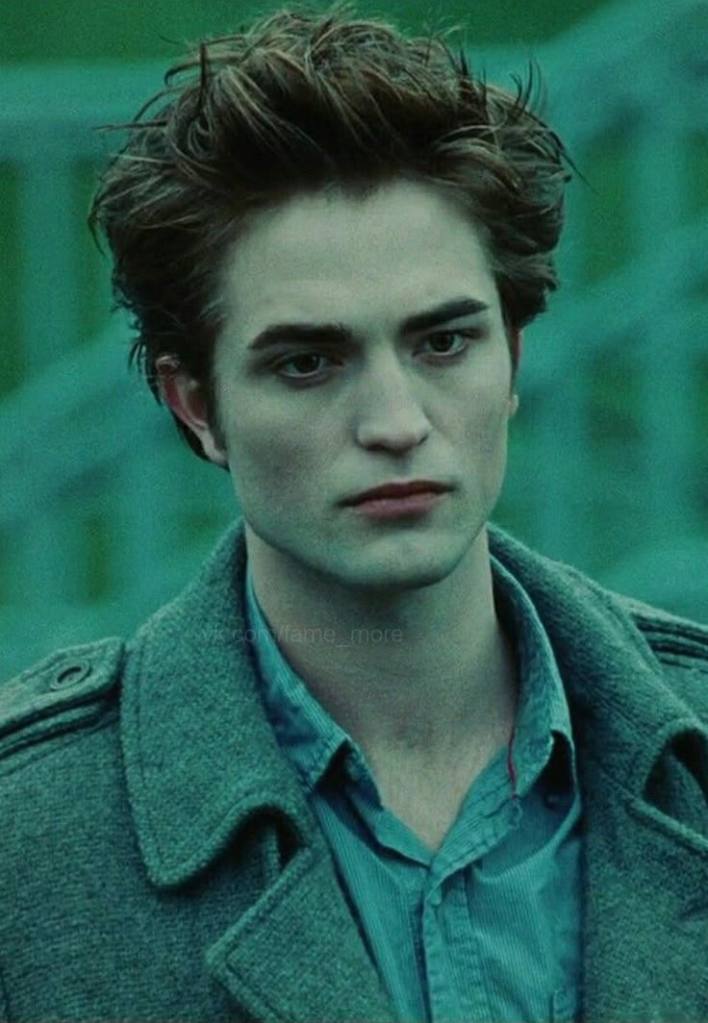
Modern Vampire: Edward Cullen
Real life Vampire: David Bowie
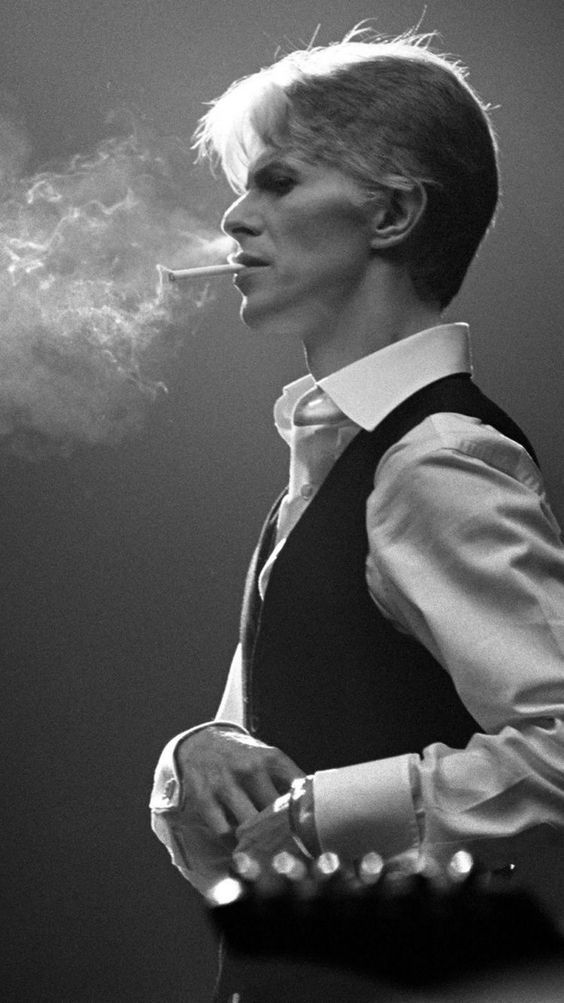
Finally, vampires are inherently inhuman.
I told you we’d get back to it.
The Self Insert is the “good” side of humanity. A normal human man can’t be a “good” man and also hold all of the shadow of the “good” woman. By making the romantic interest inhuman, the morals of good and bad no longer apply to him, and he can be as dark as the dichotomy requires.
This is what makes vampires so inherently sexual in most narratives they’re portrayed in, except for a few like Priest where they’re more like bestial zombies than damnably sexy undead. They are able to contain a depth of sexual embodiment that exceeds the limits of moral and gender restrictions, thus allowing the reader / viewer of the narrative to vicariously experience this height of desire through the Vampire’s lust for the Self Insert. This is the height of sexual expression possible in an environment that is sexually repressed, so basically most of human history.
Now I know what you’re thinking. You’re thinking that Nosferatu (2024) is gothic horror, not romance, and as such this entire breakdown is a non-sequitur. And you’d be right if I didn’t live in your walls watching your every movement.
Warning, this next segment will contain spoilers for Nosferatu (2024) but also I’m gonna be honest this movie is a remake of the movie Nosferatu (1922) which was an illegal rip off of the novel Dracula (1897) so if you don’t know the basic plot of Dracula I cannot help that you are woefully uneducated. That being said if you don’t know the basic plot of Dracula then you have a whole genre of gothic horror to explore for the first time so enjoy!
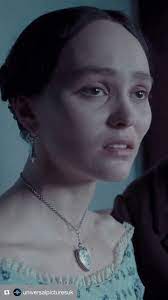
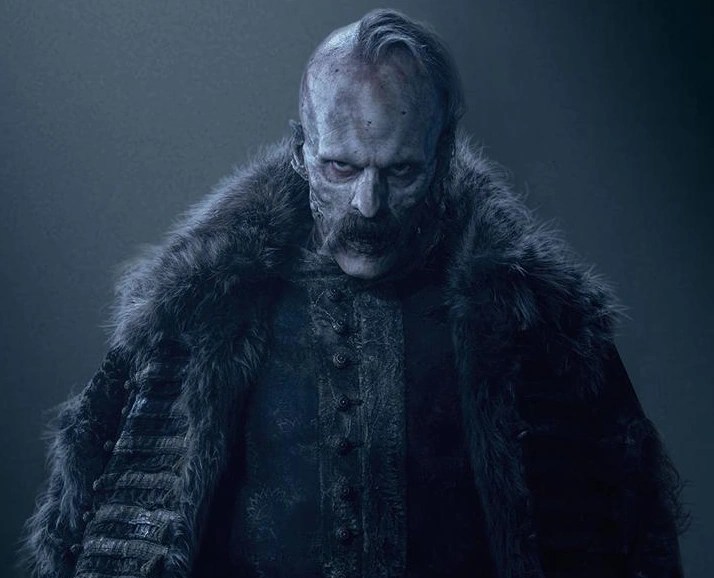
Nosferatu (2024) is a gothic horror film directed by Robert Eggers and wonderfully performed by the likes of Bill Skarsgard, Lily-Rose Depp, and Nicholas Hoult. The film is set in 1838 and opens w/ Ellen (played by Depp) pleading for a companion to comfort her, and she accidentally pledges herself to be the lover of Count Orlok (played by Skarsgard). She suffers seizures and fits due to their long distance psychic coupling and risks being imprisoned for madness until she meets Thomas (played by Hoult) and the love they share lifts her burdens for a time. Orlok, annoyed that he’s getting cockblocked by a guy who could’ve been named Gene Rick, sets a heinous plan in motion to reclaim Ellen by way of a real estate transaction.

Okay Gene Rick is really insulting to Thomas, I’m sorry Hoult Daddy.
Thomas is requested to assist some strange guy in Transylvania with buying property in Germany under the principle that he’s got one foot in the grave so he can’t do the traveling himself and he needs a helping hand. Ellen, being psychically sensitive, doesn’t want him to do this because she had a bad dream that involved a wedding where everyone was dead and the scent of lilacs, but Thomas loves her so damn much that he can’t listen to her concerns because he really wants to provide her with the life he feels she deserves. So off he goes on a 6 week journey to be a realtor.
Now we the audience happen to know that this is a horror movie and we’re treated to confirmation of this from Eggers with a scene of Thomas’ boss partaking in some satanic blood ritual to do some covenant thing so Orlok can reclaim Ellen. However, Thomas is a Man Who Loves His Wife and does not know what genre he’s in, so off he goes with a locket with a lock of Ellen’s hair to go do a real estate and make the big bucks.
The fact that real estate is a legitimate relevant factor in this movie really amuses me, there’s something absurd about this exchange of property. It’s sort of explained why it’s necessary later but it’s not really satisfying and honestly just comes across as “real estate contracts are bad and evil mmkay”.

Thomas makes it to Transylvania and spends the night in an inn where a band of Romani are dwelling. They all tell him not to go into the castle because then “his shadow will be on you” but he doesn’t speak the Romani language so he spends most of these conversations being confused and amiably stiff like a good gentleman. That night he witnesses a bizarre ritual of a virgin being led to a grave where the Romani proceed to stab a corpse and it vomits out a bunch of gross stuff. Fun!
He wakes up back in bed with mud on his shoes only to find that the entire inn and little village around it is deserted, including his horse. However, Thomas is a Man Who Loves His Wife, so he perseveres and walks on foot up to Castle Orlok. As he walks beyond an altar of crosses meant to ward off evil, he starts to suffer from a bizarre feeling and begins to fall under Orlok’s shadow which is essentially becoming roofied and affected by Orlok’s dark magick and glamour. As such he is really not in a position to notice the major red flags occurring around him, such as a carriage driven by no one and wolves chasing the horse drawn carriage without the horses going absolutely ballistic.
Orlok scolds him for being late and then compliance tests him into referring to him as my lord, getting paperwork out, being told to drink and eat, all while appearing to vanish and reappear repeatedly. Thomas, sweating and ill from the magick roofie accidentally cuts himself, leading to Orlok feeding from him.
We will be coming back to this at length, but let’s just remember that biting is analogous to sex for vampires, therefore nonconsensual biting is analogous to rape.
Thomas comes to, the next morning after being date raped and realizes he’s been bitten by something strange as he’s exploring Orlok’s castle. He’s still all magicked and lost in the sauce when Orlok awakens and insists on completing the paperwork. It is upon reconvening that Orlok realizes that Thomas is carrying a locket on his person, and remarks that Thomas has been recently married. He requests to examine it, and upon huffing the lock of hair he murmurs “lilac”.
It is then that Thomas’s original paperwork has been replaced with fancy new paperwork written in red, chthonic script that is apparently the language of Orlok’s forefathers. Thomas, locked in a psychic entanglement and drug haze, still hesitates to sign. Orlok further pressures him with a sack of gold, and between being roofied and his Man Who Loves His Wife instincts telling him to secure resources for his beloved, he signs the contract. He then states he’s not feeling well and would like to go home as soon as possible, which Orlok flatly denies before walking away with his locket, which Thomas calls out to him to return.
Thomas awakens suddenly, this time in his bed and clearly bitten again, and he is absolutely determined to find a way out. Instead, he finds Orlok’s resting place and attempts to stake him but fails. That night, his shadow passes over Thomas and forces him to allow Orlok to feed from him again. Thomas for the last time awakens that morning and is beset by wolves, and is forced to flee the castle by leaping from a window and dropping into the river below.
Back in Germany, Ellen is concerned because she’s received no letters from Thomas and his employer has gone missing. She’s been staying with a friend and her husband (featured adjacent) because it’s 1838 and women can’t exist alone without male governance, and she’s forbidden from harassing the real estate agency herself. She is convinced something has happened to Thomas and is correct, but she’s not taken particularly seriously. This escalates into night terrors, seizures, and fits that end up getting a doctor summoned to care for her.
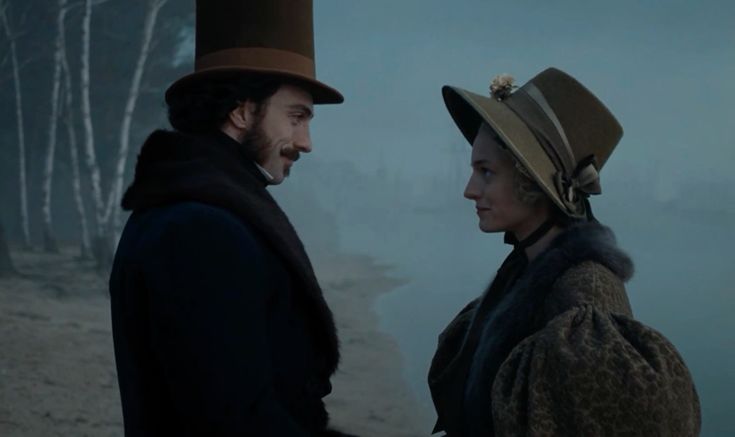
We, the viewers, know that Orlok has already begun his insidious invasion of Ellen, as he has whispered in the night to her psychically that her husband is lost to her. Her nighttime seizures continue and worsen much to the bafflement of the Enlightenment era Germans until the doctor finally recommends that they consult with an old professor of his who has turned from traditional academia to explore the occult. This decision is made in response to deeply unsettling news – Thomas’ former employer is no longer missing. He was found killing sheep and eating them raw in the market and insists that “his lordship is coming” in a manner that is highly similar to Ellen’s sleep talking in which she repeats that “he is coming”. Given the religious quality to the madman’s ravings, they set off to consult this expert in the esoteric.
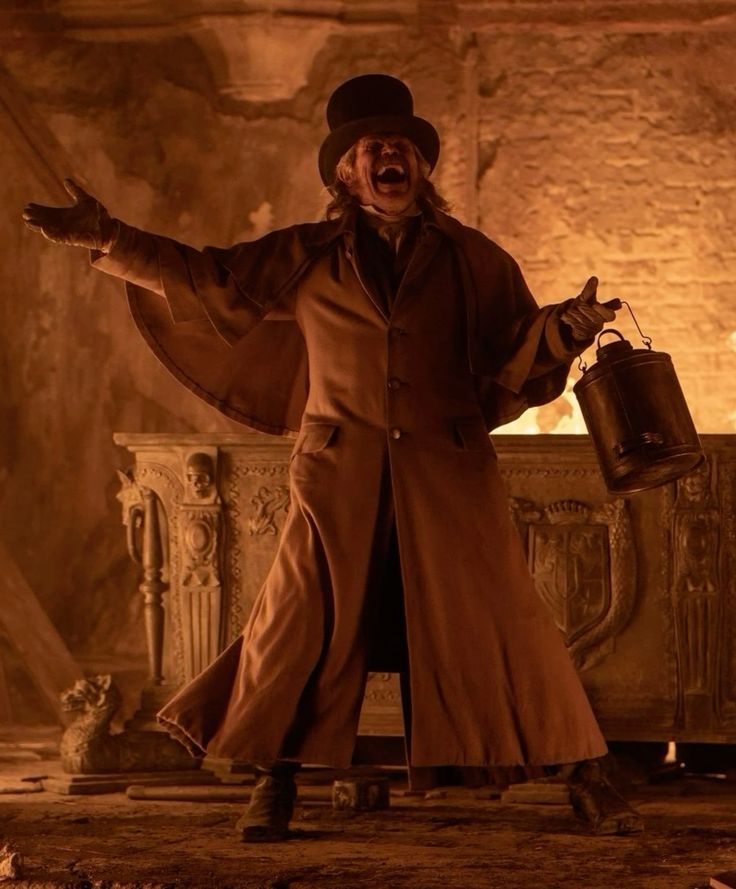
The introduction of the occult professor is one of the only moments of the film I found to be genuinely comedic. Willem Dafoe’s character Prof. Albin Eberhart Von Franz is a cat dad of many, angrily muttering to himself in Latin about astrology, when his former student gets his attention with another Latin phrase indicating who he is. We see his entire temperament one-eighty from a resentful, embittered old man into a jovial eccentric, who rapidly diagnoses Ellen’s caretaker as “very tired from staying up late caring for a young woman suffering from somnambulism. Sherry?” Dafoe brings a level of charm and zaniness to Von Franz in this scene that makes him immediately likable and trustworthy – after all, he is peak Cat Daddy – but also in many ways completely shatters the tension we’ve been grappling with the entire movie without breaking the tone. It’s a relief. Finally, someone who knows something!
Back in Transylvania, Thomas is found by and being cared for by nuns who, through the use of religious ritual, purge Orlok’s hold on him. He insists he must leave against medical advice, as he knows from Orlok’s shadow possession that Orlok wants Ellen and will go to her. The nuns insist that he must sleep in the cursed earth in which he was buried, but Thomas being a Man Who Loves His Wife gets on a horse and gets riding back to Germany.
Thomas, unfortunately for everyone in the story, is absolutely correct. Orlok has commissioned a vessel to bring him and his stone coffin to Germany by way of ship. Matters are made even worse by the veritable horde of plague rats that journey with Orlok, infecting the crew with disease. Orlok has been feeding and killing people through the nights, and only one brave crew member attempts to slay him to “end this curse” and is murdered for his efforts.
People have critiqued this choice because it breaks the notion that vampires can’t travel across running water, but also y’all do we recall that the literal 1897 Dracula did the same thing? Get with the program, vampires have inconsistent lore across worldbuilding, that’s just how the cookie crumbles.
Von Franz examines Ellen during one of her episodes and determines that she is being haunted by a demon who is coming to her, which both the medical doctor and her caretaker flatly reject. Von Franz and his student race off to explore the mad employer’s office where they find ritual candles and skulls, then finally a demonic summoning circle drawn in blood. They acquire a book from the office that has an extensive detailing of various entities that Franz takes to study. During the search there is an arrival to the city heralded by something deeply sinister: a plague ship loaded with rats and dead passengers. Additionally Herr Knock, Thomas’s insane employer, has broken free of the asylum and ferries Orlok to the estate he had purchased.
See? Real estate contracts bad, mmmmkay.
The situation in the city escalates rapidly as the next morning is greeted with a mass outbreak of plague cases. However things are looking up in the household with the arrival of Thomas, who is so ill he is falling off his horse but has at least survived the journey home. Seemingly, Ellen’s illness has ceased once Thomas returns which weakens Von Franz’s argument that she was possessed – clearly she just needed her husband, the skeptics insist – but Thomas knows better and says he has seen things… and leaves it at that.
The parallels between Thomas’s experience of vampiric assault and rape are unmistakable at this point from his shame and unwillingness to describe his experience to his subsequent response to the following events.
That night, Ellen attempts to spend the night in bed with Thomas – just for comfort, not necessarily sexually – but Thomas feels the presence of Orlok amplifying at night and feels as if he cannot breathe and is choking.
This is what we would call a trauma response.
Ellen leaves him to rest and spends the night with her friend Anne instead. She dreams of Orlok, who comes to her and tells her that he has come to fulfill the pledge she made as a child. She rebukes him insisting she loves Thomas and that Orlok cannot love, and he agrees as he is merely an appetite, but he still cannot be sated without her. Orlok ultimately reveals that in his castle the chthonic document Thomas had signed was actually a dissolution of their marriage, attempting to undermine Ellen’s steadfast commitment to her husband. Still, she refuses him, and he finally gives her an ultimatum. While he cannot feed from her by physical force unlike everyone else in the film so far as this would violate the nature of their bond, he says he will kill everyone she cares for ending with Thomas as well as letting the plague consume the town if she doesn’t give in after another two nights. Ellen awakens from her dream to realize that Orlok has fed from her friend Anne and the room is infested with rats.
Ellen’s caretaker is unsurprisingly enraged that his wife has been harmed, but as a gentleman he solidly represses his emotions and instead sends Ellen and Thomas home. The two of them shamble back as Thomas leans heavily on Ellen to keep moving and we get to see the raw devastation of Orlok’s plague. There are bodies in the streets that are being collected onto a cart and the hospital is completely overrun.

It is during this moment that the characters learn the psychotic employer has escaped which they had previously missed in the hustle of navigating the influx of plague and Von Franz identifies the type of the beast Count Orlok is – a particular vampiric demon known as Nosferatu. Nosferatu is confirmed to have a single weakness, which is that he must return to his grave before “the first crow of cock” or else he’ll die, but that he can be in theory distracted by a maiden offering herself willingly to be consumed so he doesn’t retreat to his grave in time.
Now I know “first crow of cock” means dawn, and you know that it means dawn, but it does imply that the solution to their problem is morning wood.
Von Franz brings the news to Ellen’s caretaker and he is angry that there are no clear solutions that they can personally act upon. Von Franz is stunned he has sent them away and insists that this plague is no mere plague and evil must be recognized to be defeated. The man sends him out, citing his need to protect his diseased wife and two daughters.
Back in their home, Thomas and Ellen are having a moment. More specifically, night has fallen and it’s confession time. Ellen starts the conversation saying she has something foul and base to share, and Thomas insists that nothing she says will shake him for he is a Man Who Loves His Wife and also because he understands what true horror is now that he’s encountered and been assaulted by Orlok. Ellen then explains that she is the one who reached out to Orlok accidentally when she was young and forged the psychic bond.
Thomas, understandably, is stunned by this revelation. Imagine telling your wife that you were raped and that your rapist has traveled across nations to rape her next, and she says “yes we were lovers before I met you”.
Ellen then turns the tables on Thomas and slaps him with the accusation that she knows he sold her to Orlok for a sack of gold that he doesn’t even have now. She throws it in his face that she has never cared for an opulent lifestyle, she has only ever wanted him, and if he had just listened to her then perhaps none of this would have happened. Upon screaming that they never should have married as they are already dead, she launches into another possession seizure. Thomas is ready to run to call the doctor and Ellen comes out of it, promising to be good, crawling on her knees before him… before immediately saying “you never pleased me the way he did”.
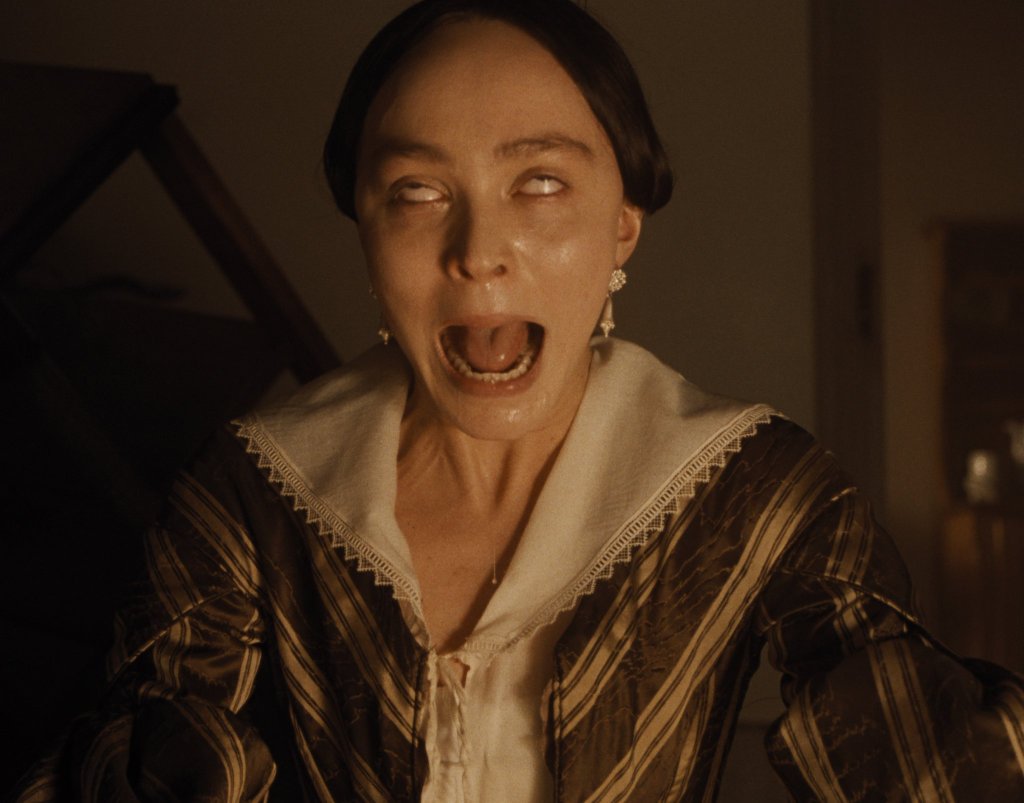
This lights a fire in Thomas who immediately carries her off to reclaim her sexually, and she is enthusiastically crying out “take me, take me, let him see our love” as they fuck. A jumpscare vision interrupts them and she dissolves into a fit of hysterical giggles and tears saying she must go away and Thomas clutches her to him, saying he shall never abandon her.
THIS IS A MAN WHO LOVES HIS WIFE. WE STAN THOMAS HUTTER. Sidebar, this is also what enthusiastic consent looks like. While there’s definitely tension in their coupling from the argument and cruel remarks exchanged prior, there is no coercion from either party and they’re both indicating they very much want to be here.
Orlok, forced to witness this due to his psychic bond with Ellen, is predictably pissed. His shadow passes over her friend’s home and he sends the husband to sleep before murdering the children and wife. That’ll get Ellen hot and bothered for him, amirite?
Ellen, Thomas, and the doctors go to the funeral the next day and insist that they must all rally together to kill the Beast. The plan is for the men to go to Orlok’s purchased home to burn down his resting ground in the hopes that without a place to return to by dawn he will perish, but Ellen pulls von Franz aside to ask him if he truly believes this will work. Von Franz admits to her that in truth, the only way he knows of to slay Orlok is for a maiden to willingly offer herself as a sacrifice to distract him until dawn. He urges her to direct Thomas to stay away from home tonight, then remarks that in a previous time, she could have made a great pagan priestess, but in this despairingly rational era perhaps she has another destiny instead. Ellen later complies, begging Thomas to “not come home” until Orlok is dead.
The boys recuperate for the day before realizing that Thomas’s friend is missing from his home, and they set off in search for him. They find him inside his family’s crypt, having died from the plague there but not before he defiled his wife’s corpse.
There’s something disgustingly romantic about this – I have lost you but the last thing my cursed body will feel is your touch. If it damns me, let me be damned, so long as I am with you. Ugh I love it, it activates my inner booktok girlie.
Determined to kill Orlok before he can harm another soul, the lads head to his estate. They strike into his coffin only to find that it’s just Herr Knock, who is serving as a distraction. A distraction for what, you ask? Ellen has summoned Orlok to her bedchamber and has offered herself “willingly” to him. I have opinions but we’ll get there later. The covenant is sealed, she disrobes, and Orlok begins to feed. Thomas is running full tilt to get back to Ellen as Von Franz burns the building down, raving about Ellen’s destiny.
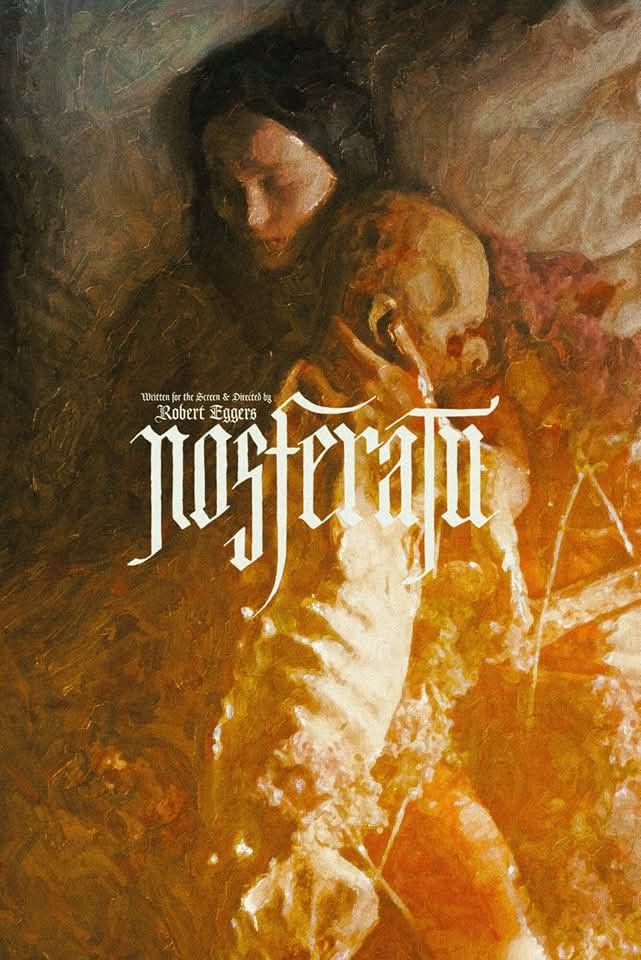
As dawn approaches, Orlok pauses in his teethfucking, momentarily considering self preservation, but Ellen in a state of hazy coital bliss pleads for him to stay, and he resumes consuming her. Less than a minute later, the rooster crows and true dawn has arrived, and Orlok sits up in horror as he begins to desiccate. Ellen, trembling with exertion, rises to match him, cradling his face as if to say “I win”. Orlok, struck dead by the holy light of day, collapses atop her, Ellen following him after Thomas sees her one last time. The movie closes on a shot of Orlok in his grotesque nudity draped artfully on Helen, who beneath him wears a death mask of serenity despite the rivers of blood flowing from her body.
That was a lot of summary but I really wanted you to feel the story get over it.
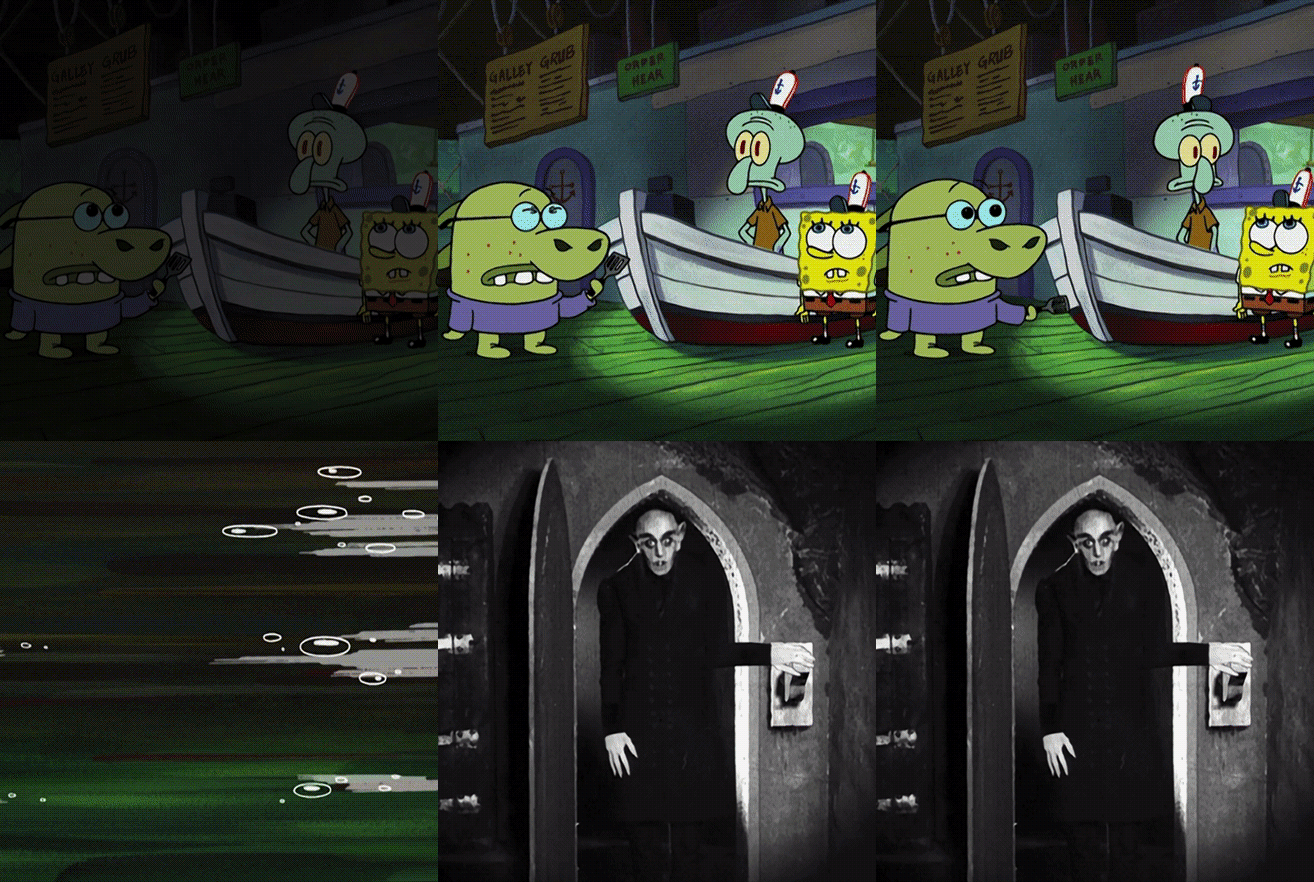
In every depiction of Nosferatu, whether that’s Nosferatu (2024), Nosferatu (1922), or Spongebob (2002), he is the villain of a horror story. He is not intended as a romance figure. He is not intended to be a fantasy object. He is explicitly depicted as grotesque and skeletal, a figure resembling death, a plaguebringer, a malignant hunger. So why did this person watch this movie and say “ew sexy vampire trope”?
It brings us back full circle to what makes a vampire a vampire (supernaturally seductive and embodying androgyny) but it also brings me to my final point – the psychological experience of a vampire is entirely rooted in consent and is what plants a vampire story into a genre. To explore this we need to do some comparisons to vampires in the romance genre.
Buckle up bitches, it’s Twilight reference time.

In Twilight, Edward Cullen is a member of the Cullen vampire coven, a group of “vegetarian” vampires who live in Forks, Washington. Not only does he not bite people without consent, no matter how badly he wants to in the case of his blood hunger for Bella Swan, he specifically doesn’t even bite people, he feeds on animals. If biting is analogous to sex, this could be taken as bestiality but I think it’s more charitable to interpret it as a form of masturbation. Not all of the Cullen vampires are as effective at restraining themselves but 1) any failure on their part is considered a tragedy 2) the two notable mentions of murder by vampire in the entirety of the Twilight series are acts of sympathetic vigilantism. Edward goes full Dexter and uses his psychic powers to detect predators before they hurt people and Rosalie murders her abusers in her wedding dress, which is badass and I want to be her when I grow up.
look at this psychotic grin atta girl
However, when vampires are in a gothic horror context, nonconsensual biting is significantly more frequent and the experience of being bitten is far more harrowing and violating. This functionally serves as an allegory for rape where the victim is disoriented and unwell, their life force is ripped from them, and they’re either left for dead or become ill due to the trauma. Unlike a character getting raped, it’s a lot harder to argue that it’s the victim’s fault for being bitten because the vampire is so much stronger than them and is using magick to manipulate… oh wait that’s exactly how power dynamics and date rape drugs work. I know there are people who would blame Thomas for not reading the signs that something was amiss, but when we consider his primary personality traits are trying to be a good gentleman and being a Man Who Loves His Wife, it’s clear that Orlok is taking advantage of him being a decent human being, just as a (g)rapist using drugs takes advantage of social circumstances to push their victim into a scenario where they’re easier to abuse.
On this note, I’ve seen multiple people refer to Thomas’s assault as having “sexual undertones” and how he also was into Orlok and down bad to get fanged… And I think this is a huge problem. Being roofied repeatedly by magick does not mean someone is into it. Feeling oppressive darkness and becoming ill and weak because someone ripped your lifeforce from you without consent is from being violated, not from having so intense of an orgasm from getting bitten you got subdrop. If you don’t know what subdrop is then you don’t get to comment on Thomas “secretly” enjoying being bitten by Orlok. Let’s be real – abusers constantly use their victim’s conflicting experiences and feelings to delegitimize their experiences and that is exactly what Orlok does to Thomas. Even if there are elements to his violation that may have caused physical or sexual pleasure for Thomas, without consent it is still violating and not desired. Get it together people.
In both depictions of vampires, they are supernaturally seductive and can be possessed by bloodlust. However, even though Edward is a stalker, controlling, and generally dismissive of Bella’s desires, he remains a romantic hero because he refuses to bite Bella at all, let alone nonconsensually bite her. Edward in fact is so terrified of Bella’s death that he leaves her despite knowing the toll it will take on her (Midnight Sun made him look like garbage for this one) and then tries to commit suicide by cop when he thinks she’s dead. Orlok on the other hand, doesn’t even care who you are, he is entirely driven by his desires and will do whatever it takes to get what he wants. He wants Ellen the way that a magpie wants a shiny object, once she has been consumed he will not grieve her. He runs through victim after victim on his own commissioned ship leading it to crash into the harbor because he couldn’t be bothered to restrain himself. He has no redeeming qualities.
Another point that demonstrates Orlok’s monstrosity is that while he uses multiple elements of coercion throughout the film, it is the final coercive act of demanding Ellen to submit to him or else that forever cements Orlok as the true villain film as opposed to a sympathetic tragic villain or romantic hero. It is confirmed that not only has Orlok metaphorically raped Thomas repeatedly, he has also used magick to effectively drug Thomas into ending his marriage to Ellen, which we know as the audience that Thomas is a Man Who Loves His Wife therefore he would never knowingly do this, and then when he can’t teeth-fuck Ellen, he spends the night teeth-raping her friend!
Ellen has been forced into a trolley problem where her inaction leads to not only the death of her beloved husband and friend, but also the literal entire city. The fate of hundreds if not thousands of people rests on her shoulders! To me, this I think could be argued as a point of failure in the plot. Is it truly consensual if Ellen’s alternative is letting the city die around her? Wouldn’t any action therefore be unwilling because if given a truly free choice wouldn’t Ellen refuse to be consumed by Orlok? Would this not also violate the terms of their bond? Wanting to save your husband and city is not the same thing as wanting to get teeth-railed in a sundress.
I somewhat question Eggers’ choice here but I think if I put my thinking diadem on real tight, I can see an argument that we need to cement Orlok’s figure as an irredeemable villain more than we need to make sure that Ellen is truly consenting. I don’t love it, but I understand it, because otherwise Orlok is just a sexy vampire trope gone wrong despite looking revolting. Why? Because people can’t even recognize that Ellen was underage when she agreed to be Orlok’s or that Thomas never consented to being consumed by him as being violating. There needed to be a coercive act so demonstrably vile that there was no confusion as to his villainous character.
To demonstrate, let’s consider some interchangeable quotes from Twilight, a romance narrative, to Nosferatu, a horror narrative.

Bella, on death: I’d never given much thought to how I would die. But dying in place of someone I love, seems like a good way to go. I can’t bring myself to regret the decisions that brought me face to face with death. They also brought me to Edward.

Ellen, on death: Standing before me, all in black… was… Death. But I was so happy, so very happy. We exchanged vows, we embraced, and when we turned round, everyone was dead. Father… and… everyone. The stench of their bodies was horrible… it overwhelmed the lilacs… and… But I had never been so happy as that moment… as I held hands with Death.
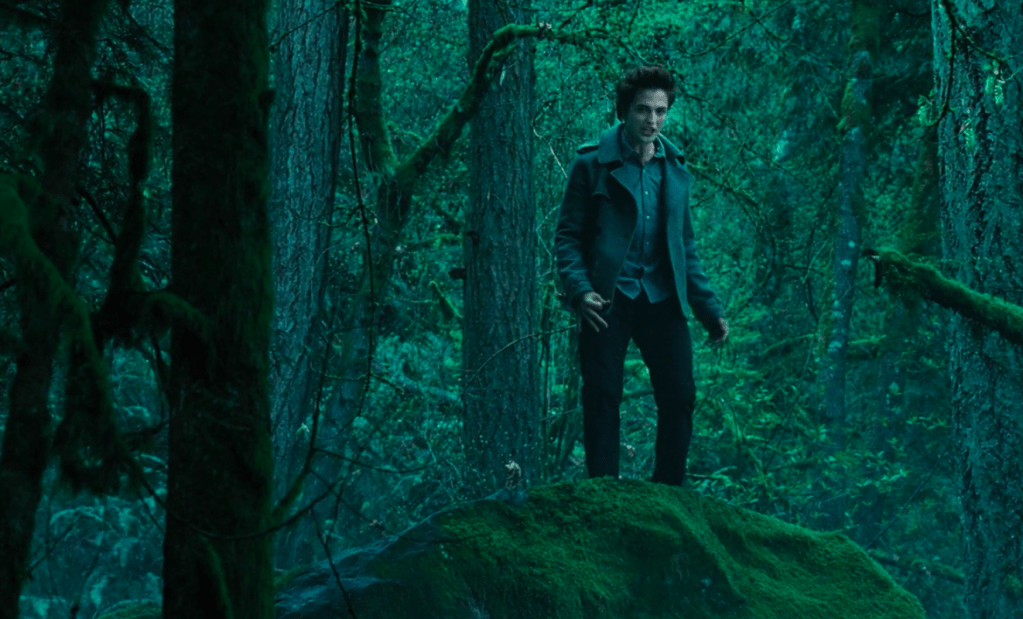
Edward, on desiring to feed on Bella: You’re like my own personal brand of heroin.
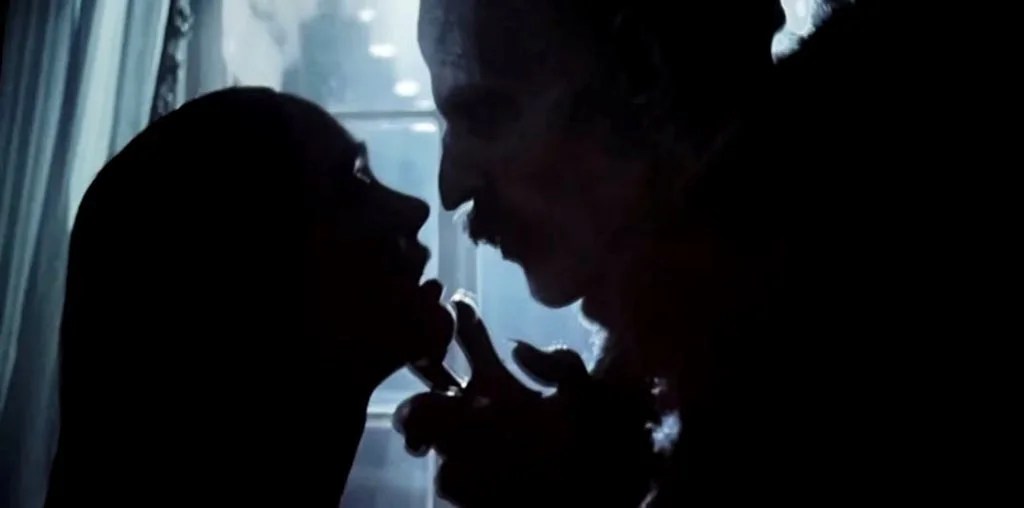
Orlok, on desiring to feed on Ellen: You are my affliction.

Edward, on waiting to meet Bella: You don’t know how long I’ve waited for you.

Orlok, on waiting to meet Ellen: You wakened me from an eternity of darkness. You… You… You are not for the living. You are not for human kind. And shall you be one with me ever-eternally? Do you swear it?
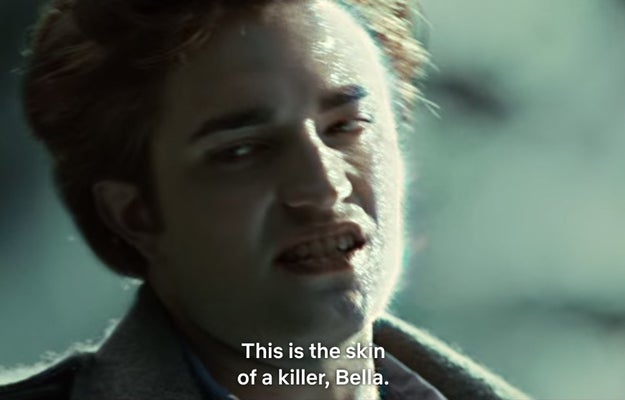
Edward, on his vampire nature: Beautiful? This is the skin of a killer, Bella… I’m a killer.
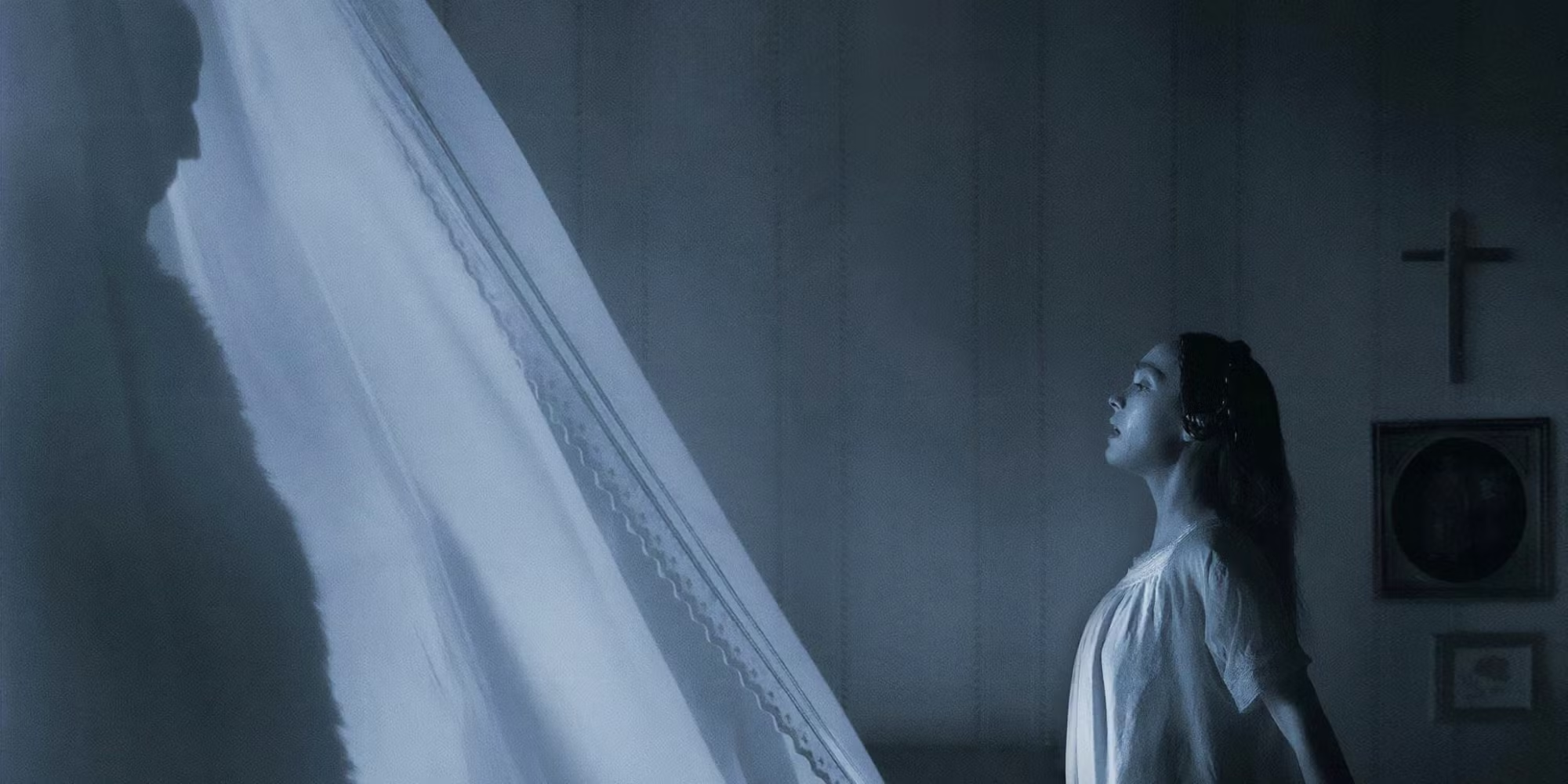
Orlok, on his vampire nature: I am an appetite, nothing more.

Edward, being a creep: Just the past couple of months. I like watching you sleep. I find it fascinating.
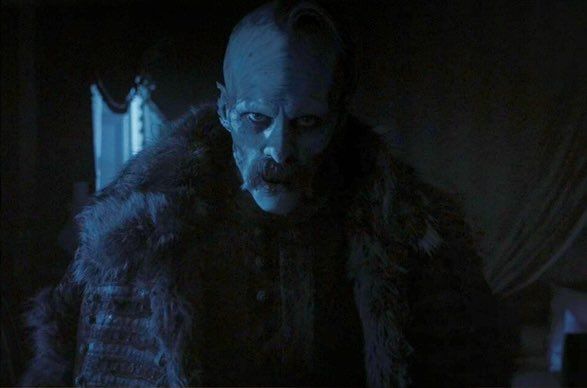
Orlok, being a creep: Your husband is lost to you. Dream of me. Only me. Only me.
So needless to say the writing of Nosferatu is stellar and the writing of Twilight is very… What it is, but I think I have sufficiently made my point. I could feasibly swap these lines and with some minor changes it would work. The line between horror and romance is incredibly blurry here, and that is exactly the point. All that would be necessary to make Nosferatu a tragic romance is him refusing to bite anyone other than Ellen, stating the plague is an accident he cannot control, and he requests nothing but for her to run away with him. That’s how thin the knife’s edge is.
Therefore, complaining about the sexy vampire trope misses the point about vampires in media in the first place. It’s not that the trope is to make what was an unpalatable unsexy creature in the original myths about vampires and make it slutty. Vampires have always been about the uncanny meld of taboo and forbidden desire. That isn’t just a trope, it’s a foundational trait of their presence in mythos.
See, Dracula isn’t actually the first entry into vampire stories. The very first vampire story was “The Vampyre” written by John Polidori in 1819, a full 78 years prior to Dracula in the same writing contest that produced “Frankenstein” by Mary Shelley, which is the first science fiction novel. In Polidori’s short tale, Lord Ruthven is a seductive character who delights in the ruin and degradation of others, and our protagonist Aubrey is forced to watch the woman he loves and his sister killed by him before dying himself.
I am heavily simplifying because I refuse to do two massive recaps in one video
This is the origin of the entire genre. The vampire is things that people generally consider valuable; he’s wealthy, he’s charming, he’s handsome, he’s titled, he’s basically a Bridgerton love interest except he’s also a twisted bastard who enjoys murdering people. Previous to Polidori’s work there were scattered stories throughout the world about vrykolakas and strigoi and other cannibalistic creatures but these were tales spread by word of mouth that likely stemmed from misunderstandings about disease and decomposition, not cohesive narratives popularized in media.
There is a random thing that lots of vampires have arithmomania which is reflected in Sesame Street’s The Count, which makes me wonder if there was also some mental health associations with autism or OCD but I have no evidence for this and this is purely speculation.
What Nosferatu does brilliantly is play on our mixed and complex feelings about love and sexuality, which is heightened by the atmosphere of 19th century Germany steeped deeply in repression. The darkness of Orlok’s rapacious desire hang over the movie like a toxic fog, infecting those he’s in contact with either despair or disease. Ellen’s self hatred of her own response to Orlok evokes a mix of sympathy and longing – haven’t we all wanted to be craved? Haven’t we all wanted someone who was unhealthy for us? Thomas’s love for Ellen is what leads to his loss of her, as he tries to give her things she never asked for only to lose everything they’d dreamed of. But I’m inclined to view the movie through an optimistic lens.
In Orlok we see what hunger without the human capacity of love turns him into – merely an appetite. But in Ellen and in Thomas we see the sacrifices willing to be made for love, love that tempers desire and commingles with it until both love and desire are made more rich for it. In Thomas we see how unwavering devotion is a noble cause worth pursuing, and know that in his heart he would always choose her. In Ellen we see how yielding does not mean weak, both in her psychic receptivity awakening Orlok from his grave and her cunning destroying him in the end. Our protagonists may not have survived intact with their lives and with no trauma, but they survived with their souls and convictions, and now there is no Nosferatu to haunt the next little Ellen. A new day has dawned, even if the night has left scars on us.
And that, is the horrific beauty of vampires.
 Salacity Speaks
Leave a comment